A historic walk through Madrid

What to See in Madrid Along Calle de Alcalá: A Monumental Route to Las Ventas

Madrid is a city best understood on foot. Its grand avenues let you move, in just a few kilometres, from historic Madrid to monumental Madrid, from neoclassicism to 20th-century architecture, and from major tourist areas to neighbourhoods where everyday city life still unfolds.

And few streets capture that evolution as well as Calle de Alcalá.

Following its route from central Madrid to the Plaza de Toros de Las Ventas means taking in some of the capital’s most iconic sights: Puerta del Sol, the Metrópolis Building, Cibeles, Puerta de Alcalá, the Retiro area and, as a grand finale, the Neo-Mudéjar architecture of Las Ventas.

It’s not just about ticking off monuments. This route lets you see how Madrid expanded eastwards and how different eras, architectural styles and ways of understanding the city coexist along the same street.

For those looking for what to see in Madrid beyond the usual tourist itineraries, walking along Calle de Alcalá to Las Ventas is a different way to get to know the capital.
Qué ver en Madrid por la Calle de Alcalá2
Qué ver en Madrid por la Calle de Alcalá1

Calle de Alcalá: a journey through different eras of Madrid

Some streets are simply for getting from A to B, and others tell the story of a city.

Calle de Alcalá clearly belongs to the second group.

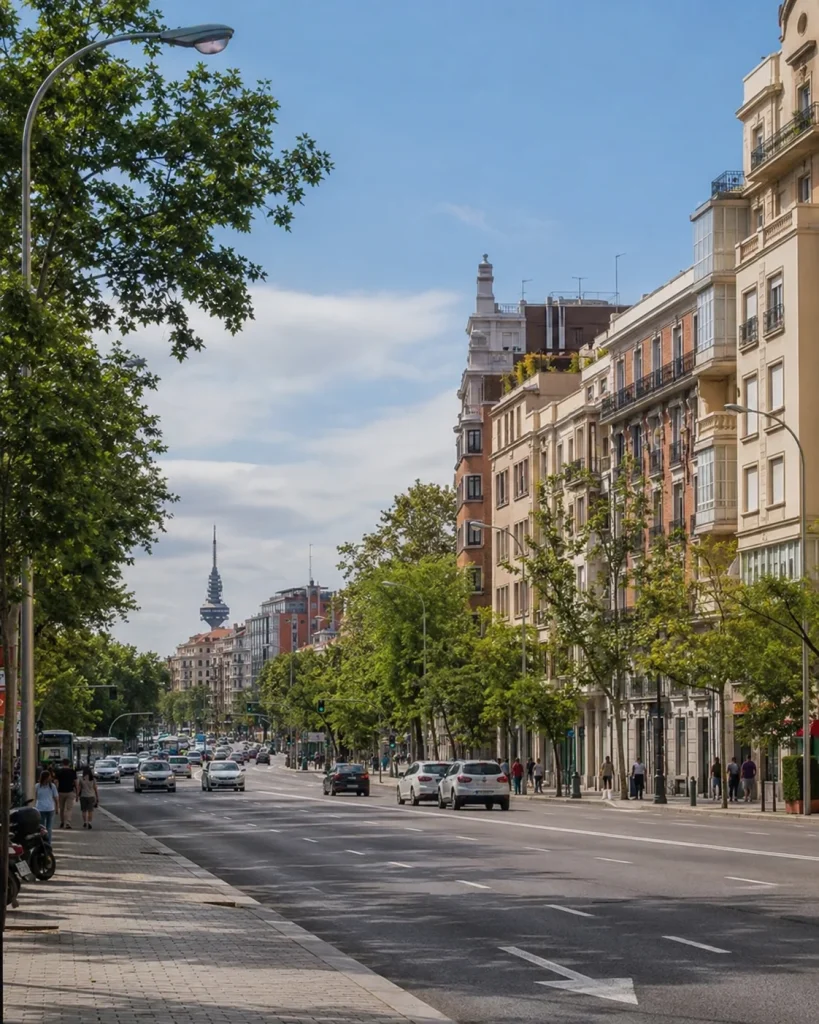
Starting almost in the heart of Madrid, it crosses some of the city’s great monumental spaces before reaching the Plaza de Toros de Las Ventas and then continuing on to other districts of the capital.

The route between Puerta del Sol and Las Ventas is around 4.4 km, so you can walk it in under an hour if you don’t stop. But as a sightseeing day out, it’s worth allowing much more time.

The whole point is to stop.

Look up at the façades. Step into El Retiro. Photograph Puerta de Alcalá. Discover lesser-known buildings. Watch how Madrid changes as you move away from the historic centre.

And finish by stepping inside one of Madrid’s great monuments: the Plaza de Toros de Las Ventas.

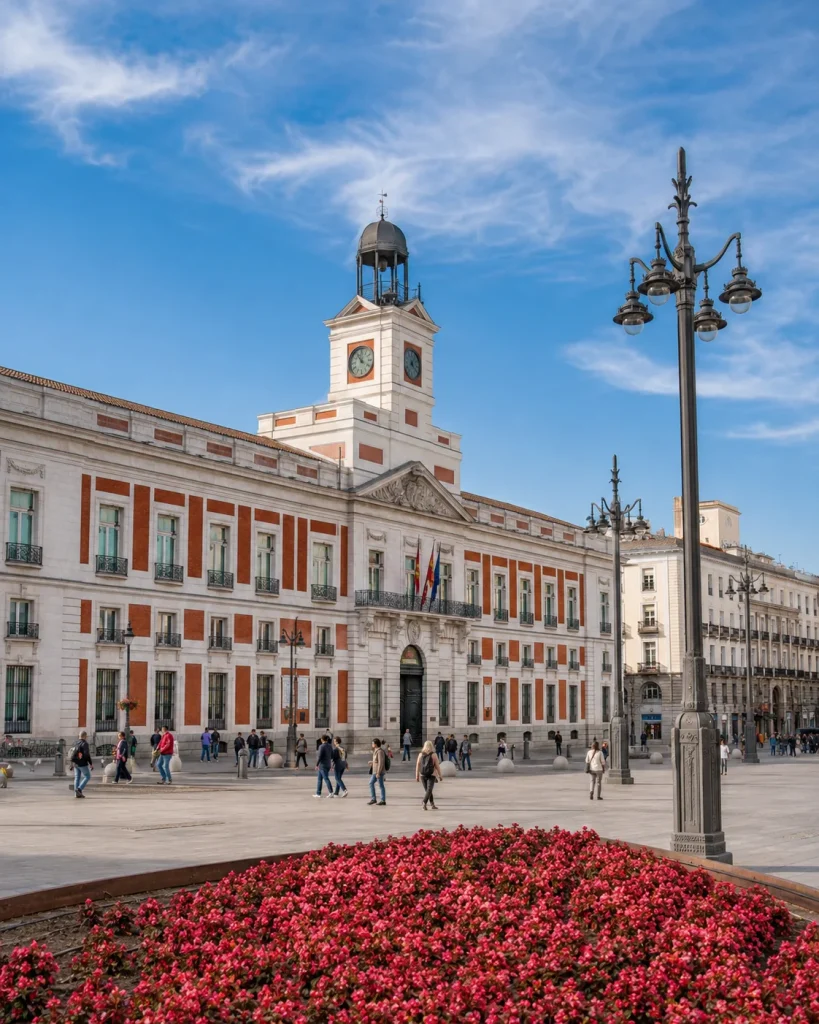
1. Puerta del Sol: the starting point

The route can begin at one of Madrid’s best-known places: Puerta del Sol.

For many international visitors, it’s one of the first places they see in the city. But instead of heading towards Plaza Mayor or the Royal Palace, this time we’ll go in a different direction: east, following Calle de Alcalá.

This change of course lets you discover a different Madrid.

In just a few minutes, the narrow streets of the centre give way to grand buildings from the late 19th and early 20th centuries.

It’s also a great way to understand that Madrid’s tourist heritage isn’t concentrated only around Plaza Mayor, the Royal Palace or the Paseo del Prado.

Madrid stretches far beyond that.

And Calle de Alcalá is an extraordinary line to discover it.

Qué ver en Madrid por la Calle de Alcalá3
Qué ver en Madrid por la Calle de Alcalá4

2. The Metrópolis Building and Madrid’s grand avenues

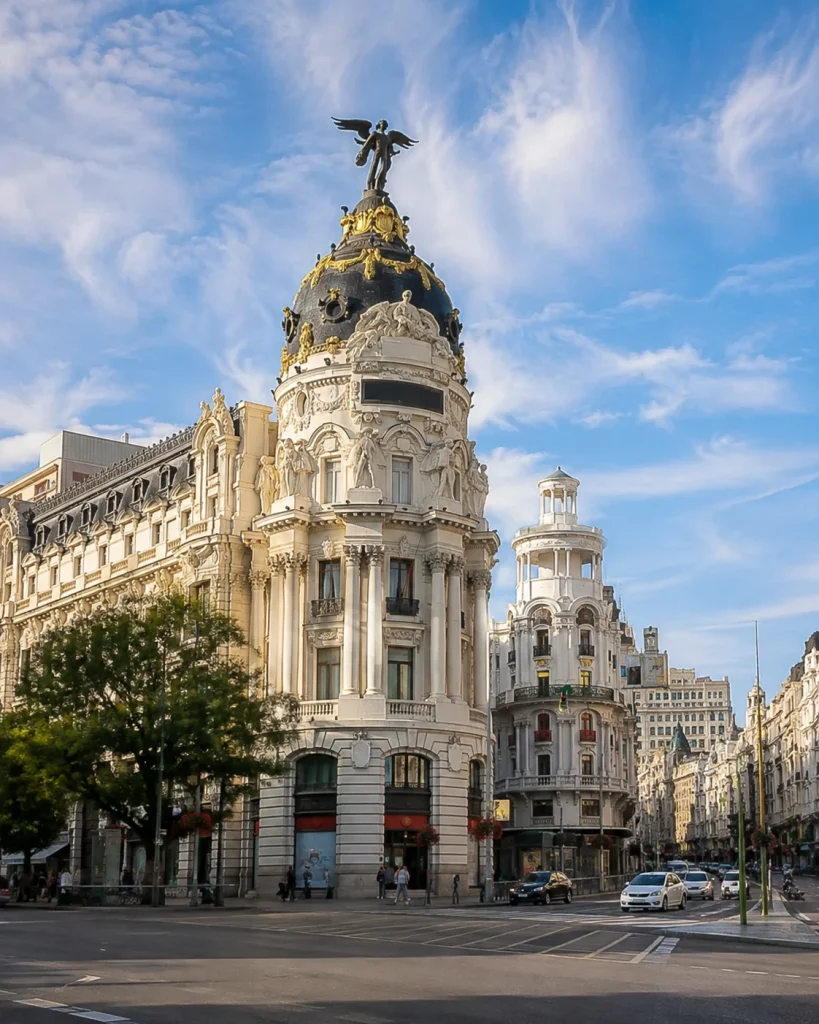
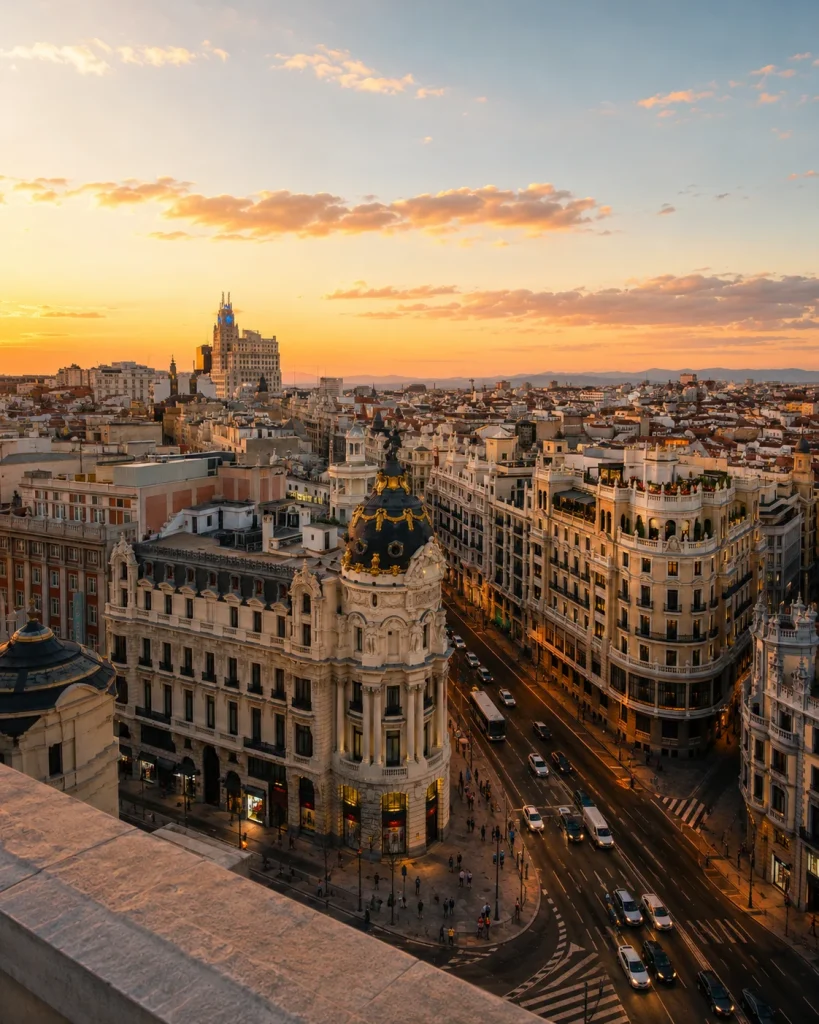
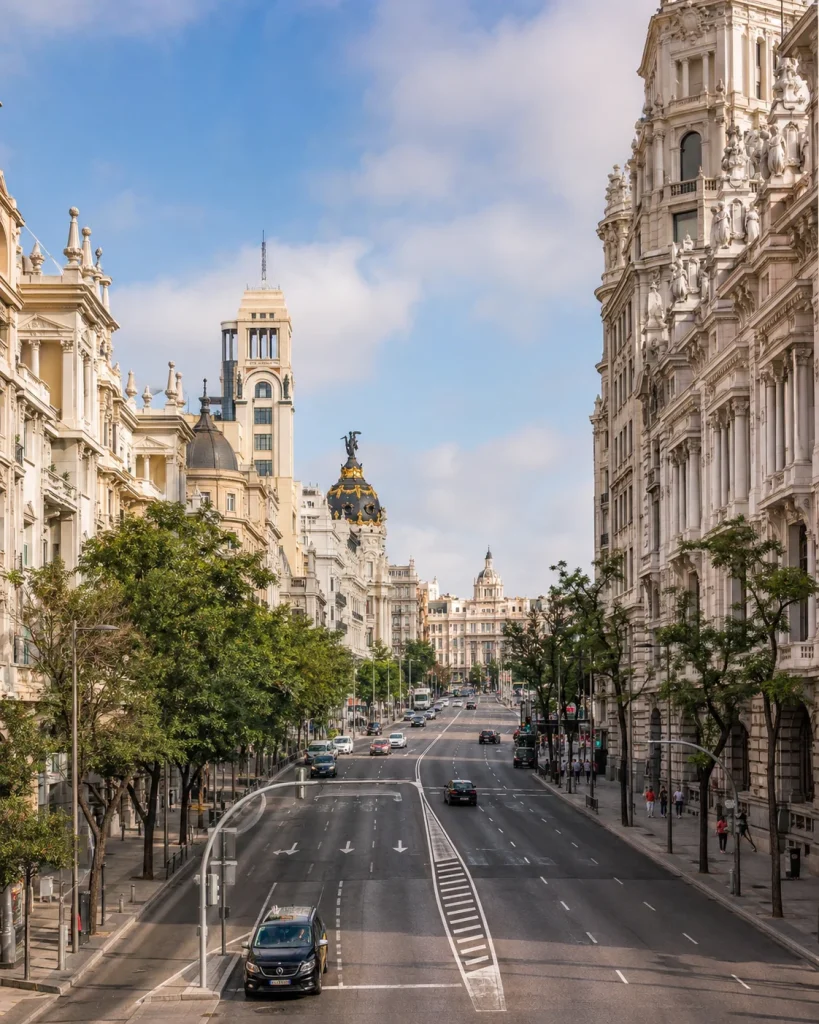
One of the first major landmarks appears at the intersection of Calle de Alcalá and Gran Vía.

Here you’ll find the Metrópolis Building, at number 39 on Alcalá, one of the most photographed architectural icons in central Madrid.

This is a great place to stop and look around.

Gran Vía stretches out towards Plaza de España, while Calle de Alcalá continues downhill towards Cibeles.

It’s one of those urban views where Madrid shows its most monumental side.

It’s also a great spot for photos: historic buildings, grand domes, traffic, terraces, pedestrians and some of the capital’s main symbols all come together within just a few hundred metres.

We continue along Alcalá.

3. Cibeles: one of Madrid’s great stages

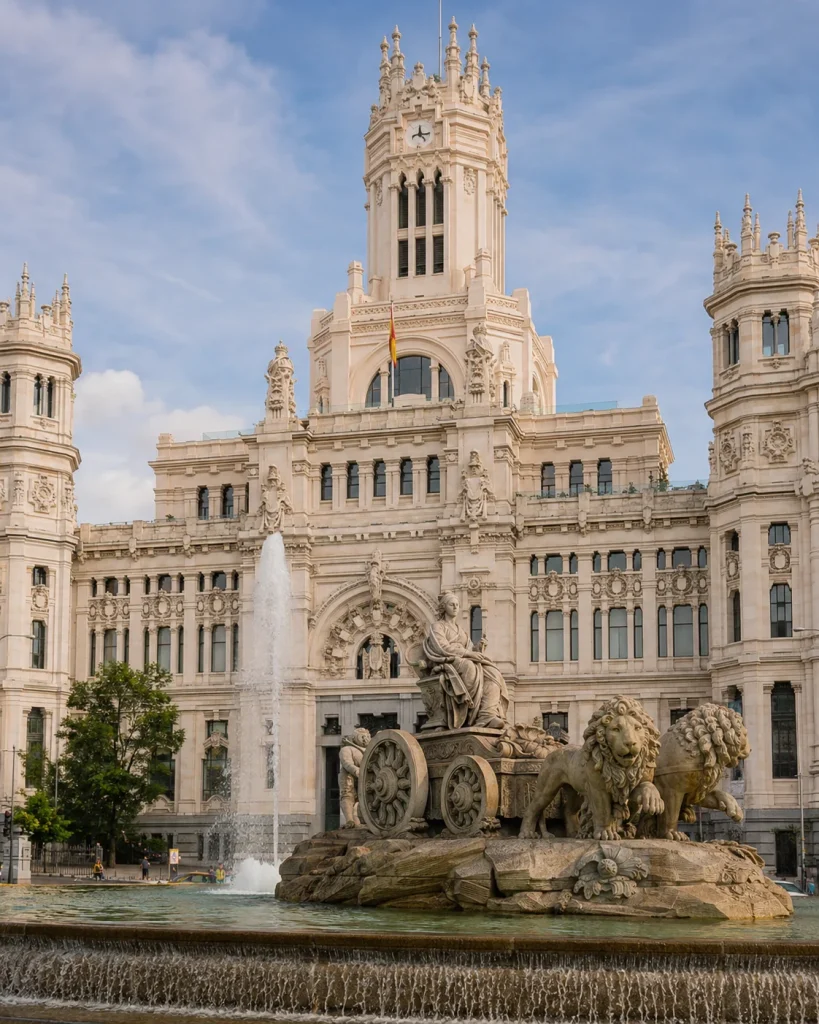
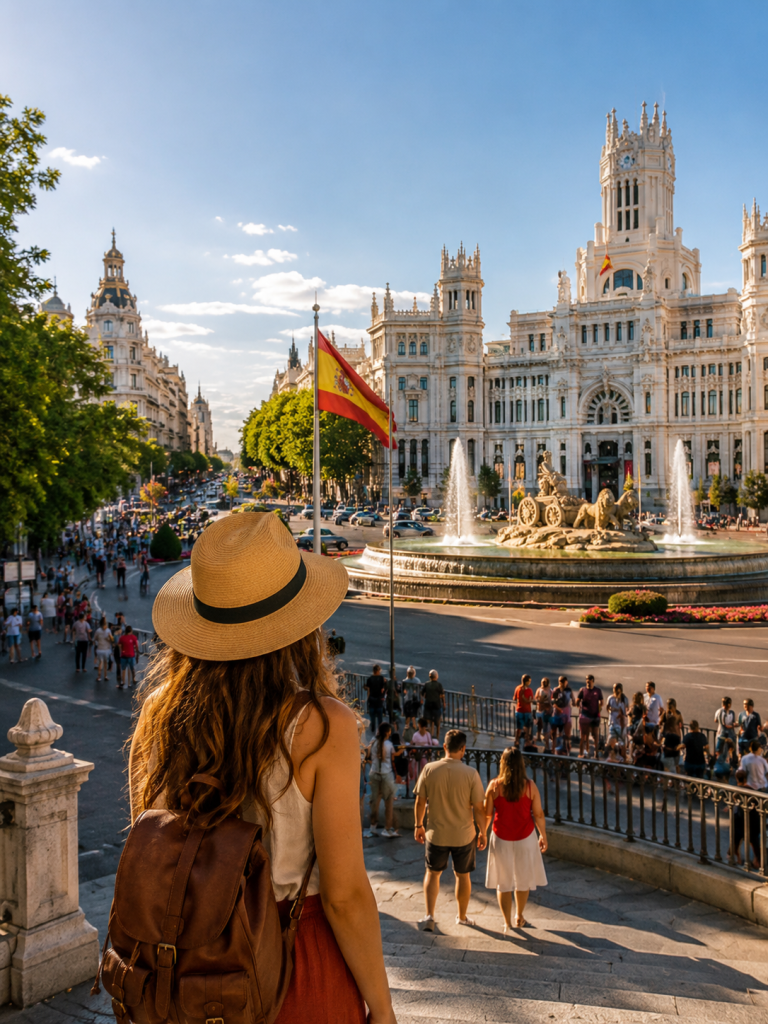
The next stop is Plaza de Cibeles.

While many travellers know its famous fountain, it’s worth taking in the whole architectural ensemble around the square.

The Palacio de Cibeles is one of Madrid’s most recognisable buildings and today, in addition to municipal offices, it houses cultural spaces and a viewpoint.

But Cibeles also has a special importance within our route.

Up to this point we’ve crossed the urban Madrid of grand avenues. From here on, we move towards one of the capital’s great monumental green spaces: the Retiro area.

The transition happens once again along Calle de Alcalá.

And a few minutes later, one of Madrid’s unmistakable symbols appears.

Qué ver en Madrid por la Calle de Alcalá5
Qué ver en Madrid por la Calle de Alcalá6

4. Puerta de Alcalá: when this area was Madrid’s entrance

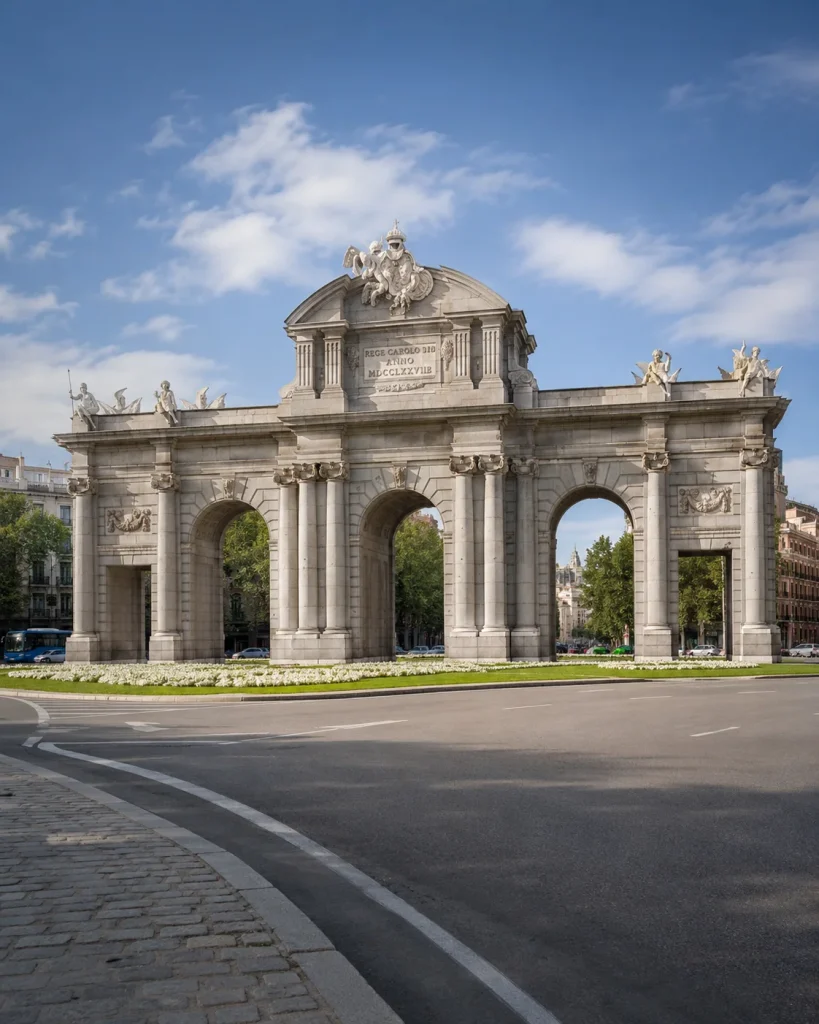
Puerta de Alcalá wasn’t always surrounded by traffic, hotels, restaurants and urban buildings.

There was a time when it truly was a gateway into Madrid.

The current structure was commissioned by Charles III, designed by Francesco Sabatini and inaugurated in 1778. It was part of the old royal gates that allowed entry into the city. Its name comes from the road that led to Alcalá de Henares.

That detail completely changes the way you look at it.

When a traveller stands in front of Puerta de Alcalá and keeps walking towards Las Ventas, in a way they’re following the old road out of Madrid to the east.

Two centuries later, the landscape is completely different.

But the urban axis remains.

The gate also stands next to El Retiro Park, one of the must-see spots in Madrid tourism and, together with the Paseo del Prado, part of the landscape recognised as a World Heritage Site.

Here, you might consider a small detour.

5. A stop in El Retiro before continuing to Las Ventas

If you have a few hours to spare, it’s well worth going into El Retiro.

You don’t need to cover the whole park.

You can take a short walk through some of its best-known areas and then return to Calle de Alcalá to continue on to Las Ventas.

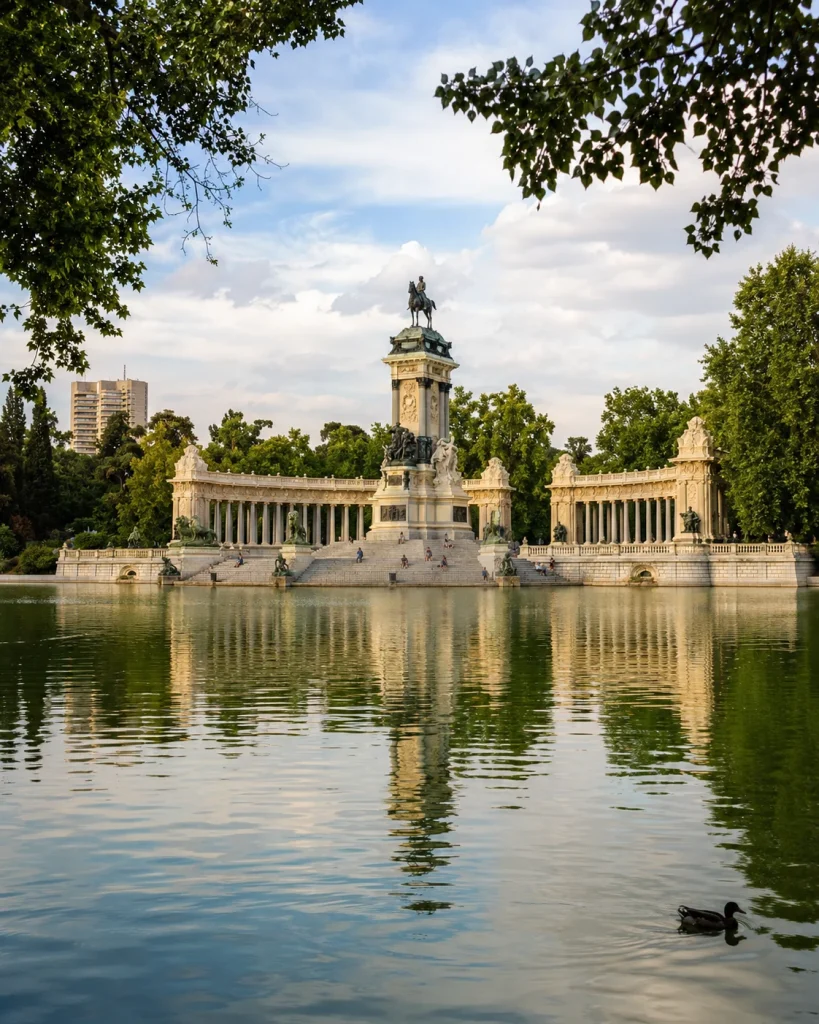
The Great Pond, the Monument to Alfonso XII, the Crystal Palace, or simply its tree-lined avenues let you completely change the atmosphere before returning to the urban route.

That combination is one of the route’s biggest draws.

In a single day you can go from the historic centre to grand avenues, visit one of Madrid’s most important parks, and end by discovering a monumental bullring from the inside.

Few routes bring together such different expressions of the city.

Qué ver en Madrid por la Calle de Alcalá7

6. An architectural clue before reaching Las Ventas

When you return to Calle de Alcalá, you’ll find a detail that’s especially interesting for understanding our final destination.

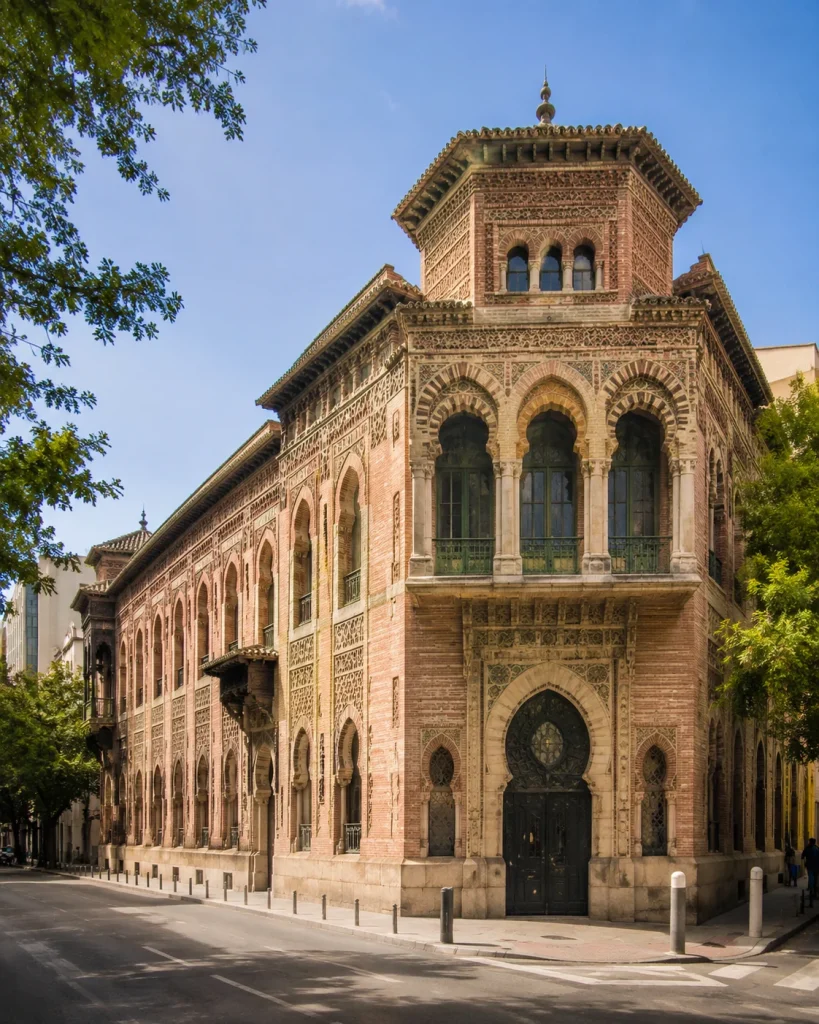
At the former Escuelas Aguirre, now the headquarters of Casa Árabe, you’ll see one of Madrid’s examples of Neo-Mudéjar architecture.

The building was inaugurated in 1886, and its ornamentation is a great introduction to a style that had a strong presence in Madrid between the late 19th century and the first decades of the 20th.

Why is it worth paying attention to?

Because further on we’ll find a monumental expression of that same architectural language.

Las Ventas.

In this way, the route gains a second thread.

We’re no longer just moving geographically through Madrid. We’re also travelling through different architectural styles.

From the neoclassicism of Puerta de Alcalá we move to Neo-Mudéjar, an architectural style characterised by the use of brick, arches and many decorative elements inspired by Spain’s Mudéjar tradition.

When we reach Las Ventas, those elements appear multiplied on a monumental scale.

7. From monumental Madrid to everyday Madrid

As you continue along Alcalá towards Goya and Manuel Becerra, the scenery changes.

And that’s part of what makes this route interesting.

The great monumental settings gradually give way to shopping areas, residential buildings, cafés and neighbourhoods where everyday Madrid life unfolds.

For a tourist it may seem less spectacular than Cibeles or Puerta de Alcalá, but it reveals something important: Madrid is not only its historic centre.

This part of the route shows a living city.

If you’d rather not walk the entire route, you can use the metro for the final stretches. Ventas station is served by lines 2 and 5, and line 2 is especially convenient from different points along this central axis of Madrid.

But if you still have the energy, it’s worth keeping on foot.

Because arriving at Las Ventas is far more impressive when the building gradually comes into view.

8. Las Ventas: the route’s great architectural surprise

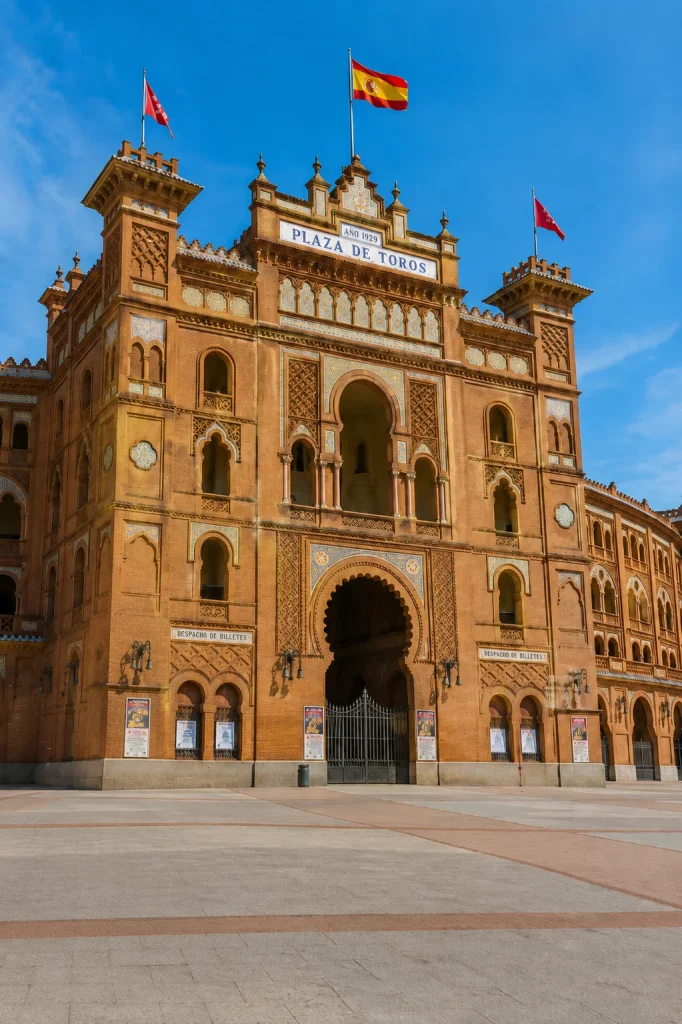
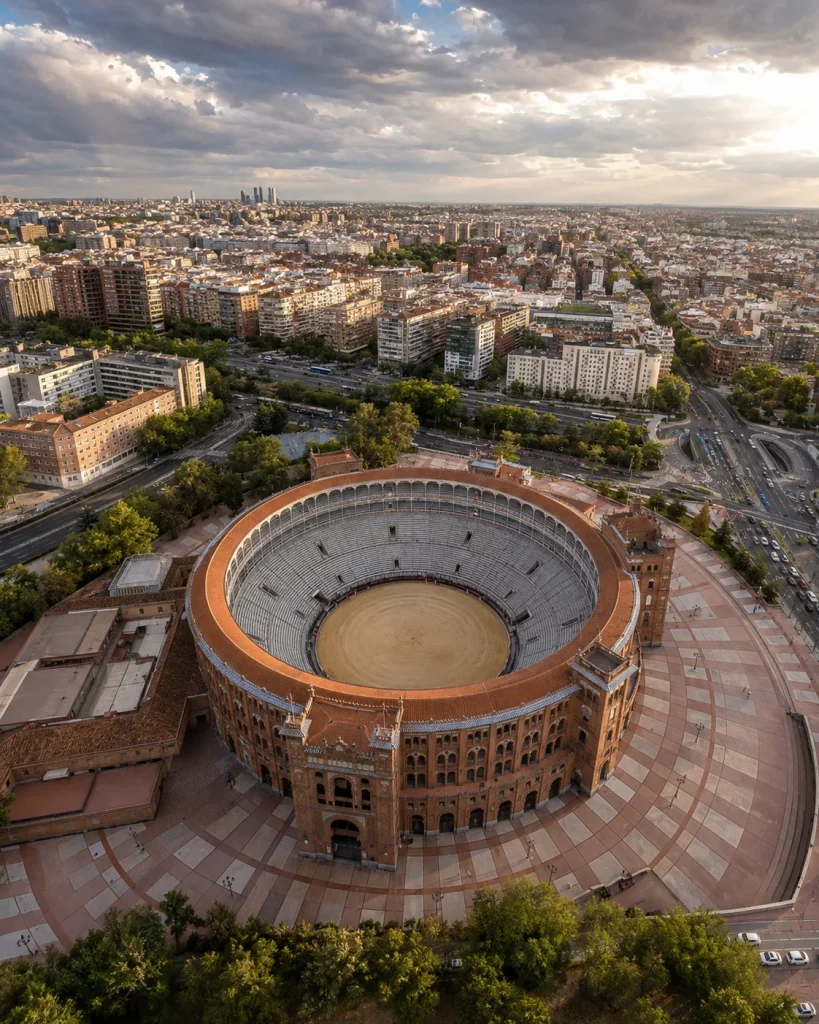
And finally we arrive at the Plaza de Toros de Las Ventas, at number 237 on Calle de Alcalá.

Even for those who know nothing about bullfighting, the first impression is mainly architectural.

Exposed brick.

Arches.

Ceramics.

Towers.

Tiles.

Grand entrances.

A structure designed to hold tens of thousands of spectators.

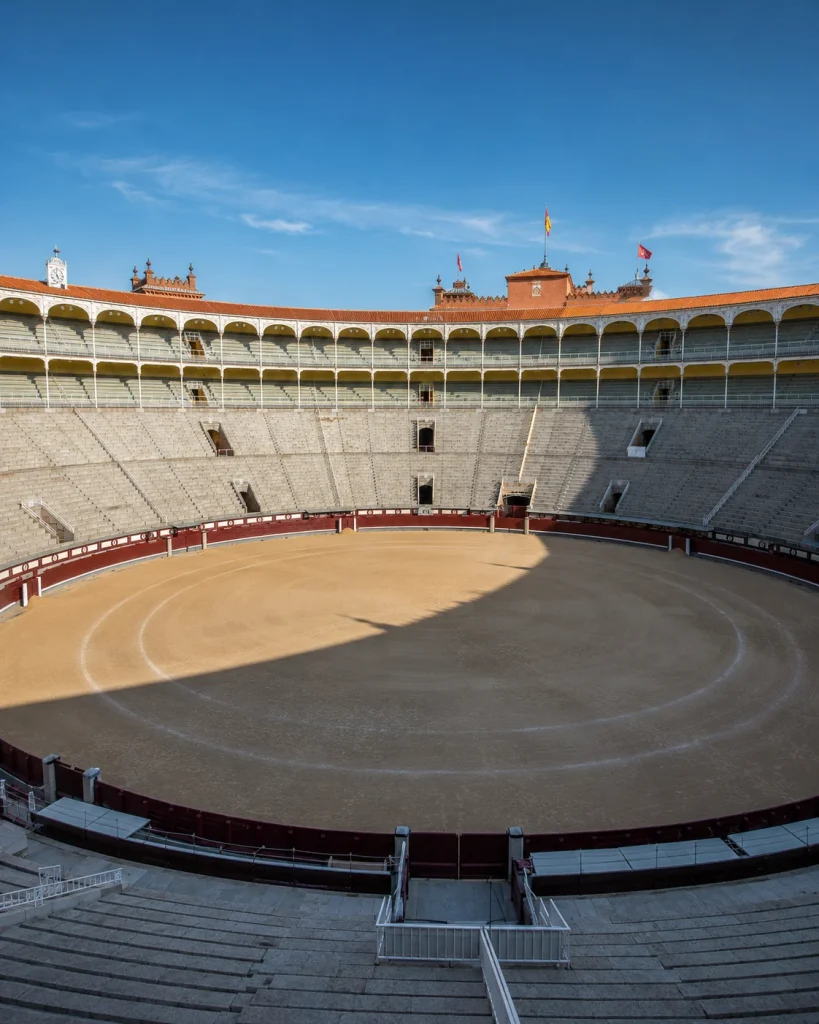
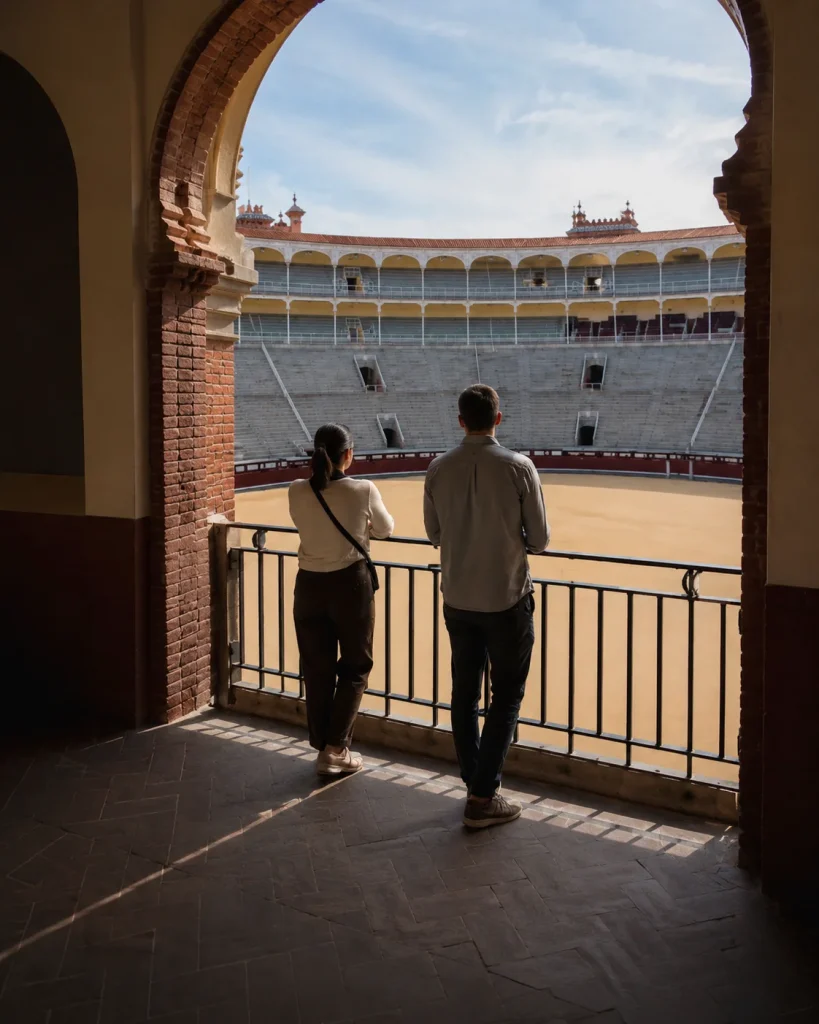
The bullring was initially designed by architect José Espeliú and completed by Manuel Muñoz Monasterio. It was inaugurated in 1931 and is one of Madrid’s great examples of Neo-Mudéjar architecture. Its arena is approximately 60 m in diameter and it can hold more than 23,000 spectators.

Since 1994 it has been listed as a Bien de Interés Cultural (Asset of Cultural Interest) in the category of Historic-Artistic Monument.

After walking along Alcalá from the centre, Las Ventas no longer feels like an isolated monument.

It makes much more sense as part of Madrid’s architectural evolution.

And that’s precisely one of the keys to this route.

Much more than the façade: visit Las Ventas from the inside

One common mistake some visitors to Madrid make is to come to the bullring, photograph the façade and leave.

Las Ventas changes completely when you discover it from the inside.

The Las Ventas Tour lets you explore different areas related to both the building’s architecture and how it works, as well as the history of bullfighting.

During the visit you may see places such as the Puerta Grande, the seating tiers, the box, the arena, the toriles gate, the cuadrillas gate and the paseíllo, the infirmary, the chapel and the Madrid Bullfighting Museum. The exact route may occasionally change for organisational or maintenance reasons.

Each space lets you see the building from a different perspective.

From the seating tiers, you grasp the venue’s sheer scale.

From the arena, your perception of the stands changes completely.

At the Puerta Grande, you discover one of the most symbolically charged places in the bullring.

And other spaces, such as the chapel or the infirmary, help you understand aspects that are hard to grasp by looking at Las Ventas only from the outside.

Las Ventas for travellers who have never seen a bullfight

You don’t need prior knowledge of bullfighting to visit Las Ventas.

In fact, for a tourist arriving in Madrid for the first time, it can be especially interesting to discover a cultural world they may have seen in images, but not necessarily understood.

What is a capote?

How is it different from a muleta?

What role do the banderilleros play?

Why is there a Puerta Grande?

How is a bullring organised?

What are the seating tiers?

Where does the traje de luces come from?

How is the toro bravo bred?

How important is Las Ventas within bullfighting?

The tour helps answer many of these questions and understand the vocabulary, spaces and traditions associated with the bullfighting world.

That’s why visiting the Plaza de Toros de Las Ventas can be seen as a cultural tourism activity, whether or not the traveller has any prior knowledge of bullfighting.

The standard tourist visit also doesn’t involve attending a bullfight: it’s a cultural and historical tour of the monument.

Qué ver en Madrid por la Calle de Alcalá11
Qué ver en Madrid por la Calle de Alcalá12

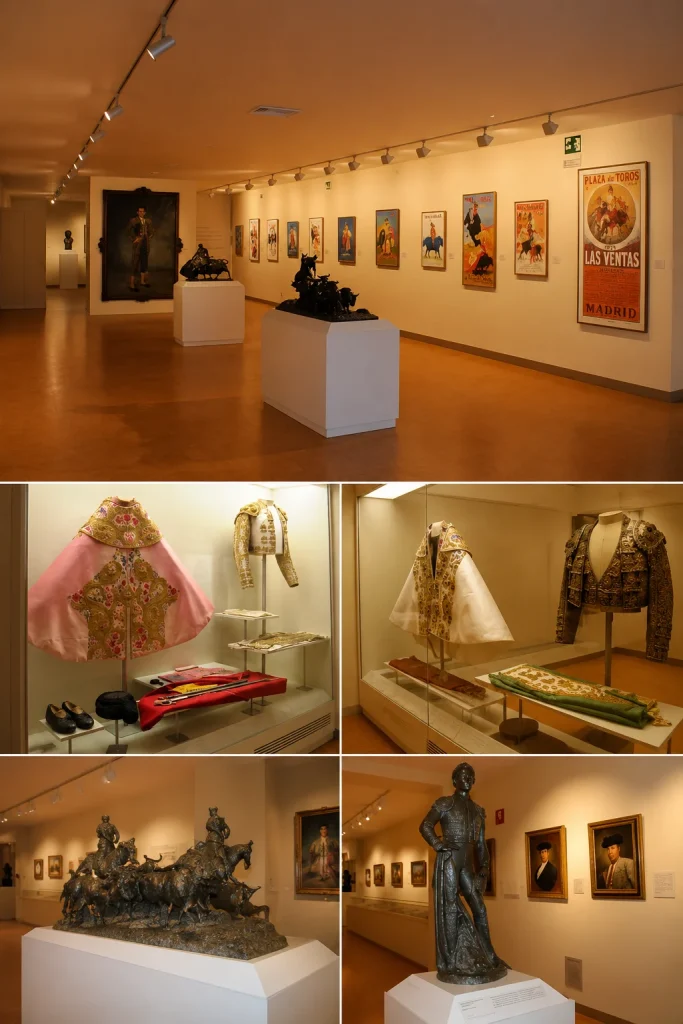
The Madrid Bullfighting Museum: history, art and unique objects

The experience continues at the Madrid Bullfighting Museum, included in the Las Ventas visit.

It’s an especially interesting stop because it helps put much of what you’ve seen on the tour into context.

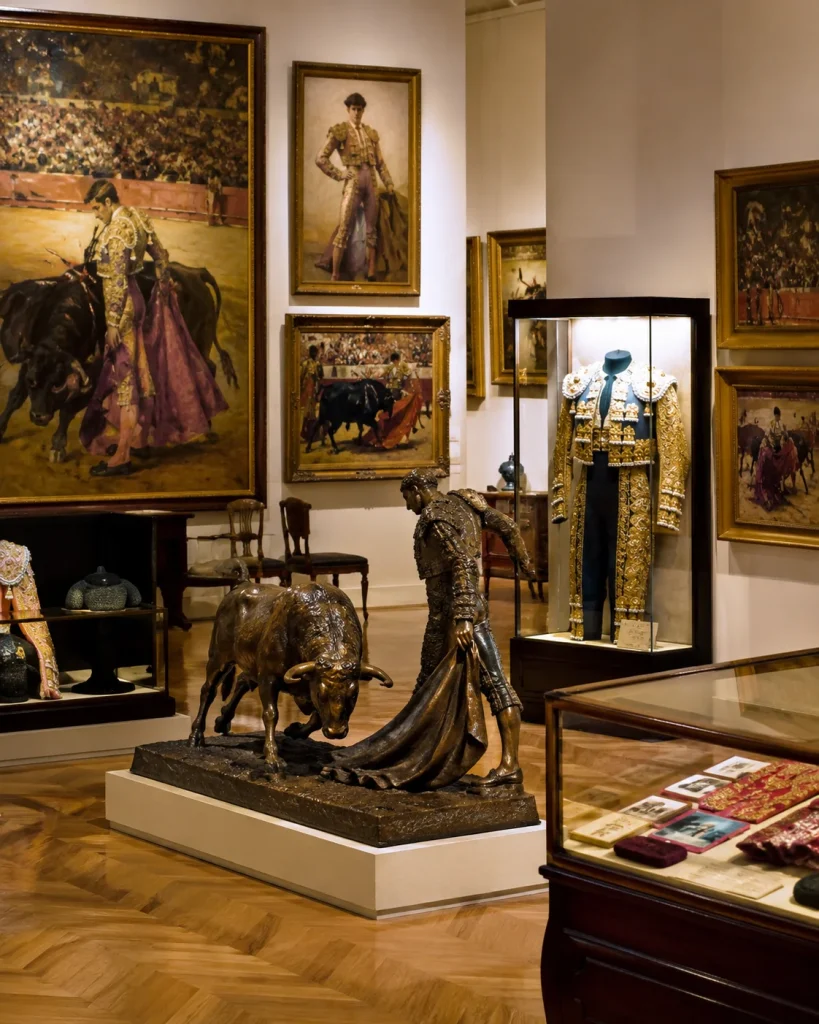
Among its holdings you can see traje de luces linked to major figures in bullfighting, capotes de paseo, posters, sculptures, engravings and various objects related to bullfighting history.

Among the pieces and collections are items linked to names such as Marcial Lalanda, Joselito, Belmonte, Bienvenida and Domingo Ortega.

Here, bullfighting is also presented from the perspective of the decorative arts.

Embroidery, textiles, design, poster art, painting and sculpture show just how much the bullfighting world created its own aesthetic.

And that is precisely one of the reasons why bullfighting tourism in Madrid can be approached from a much broader cultural perspective than the events themselves.

Bullfighting and Spanish culture: a connection reflected in art

The influence of the bullfighting world can also be found outside bullrings.

Goya, Picasso, Lorca and many artists, writers and filmmakers incorporated images, characters or references linked to bullfighting into their work. The official Tourism Madrid portal itself presents the bullfighting world as a cultural universe made up of traditions, cattle ranches, clothing, language, poster art, gastronomy and artistic expressions.

That’s why a visit to Las Ventas can perfectly complement other cultural routes around Madrid.

During their stay, a traveller can visit the Prado Museum, explore the Madrid of the Habsburgs, see the Royal Palace, walk through El Retiro, and devote another part of the trip to discovering a completely different tradition within the same city.

Madrid makes exactly that possible: going from Goya to Gran Vía, from the Royal Palace to El Retiro, and from classical art to bullfighting heritage in very little time.

Qué ver en Madrid por la Calle de Alcalá13
Qué ver en Madrid por la Calle de Alcalá14

Las Ventas as a monument, even beyond bullfighting

This may be the most interesting aspect for visitors looking for different places in Madrid.

Las Ventas is also worth appreciating simply as architecture.

Its brick façades and ceramic decoration make it very different from other major monuments in the capital.

After visiting the Baroque, Neoclassical and 19th-century Madrid of the centre, coming across a Neo-Mudéjar building of this scale greatly broadens the picture a traveller takes away of the city.

There isn’t just one Madrid.

There’s the Madrid of the Habsburgs.

The Madrid of the Bourbons.

The Madrid of the great museums.

The Madrid of Gran Vía.

The Madrid of El Retiro.

The Madrid of its neighbourhoods.

And there’s also bullfighting Madrid, whose great monument is Las Ventas.

How much time should you allow for this route around Madrid?

The full route from Puerta del Sol to Las Ventas is approximately 4.4 km and can be walked in just under an hour without stops.

However, to really enjoy it, we recommend turning it into a half-day route or even combining it with other activities.

One possible plan is to start in the morning at Puerta del Sol, walk along Alcalá to Cibeles, continue to Puerta de Alcalá, take a short detour into El Retiro, and then carry on to Las Ventas.

Once there, you can take the cultural visit of the bullring and the Bullfighting Museum.

The audioguide visit to Las Ventas usually lasts around 45 minutes to one hour, although you can adapt it to your own pace.

That way, a simple walk becomes a journey through several centuries of Madrid’s history.

google-maps placeholder image

How to get to Las Ventas directly

If you don’t want to do the whole route, you can get there directly by public transport.

The Plaza de Toros de Las Ventas is located at:

Calle de Alcalá, 237
28028 Madrid

The Ventas metro station (lines 2 and 5) is right next to the monument. There are also many bus lines connecting this area with different parts of Madrid.

These great connections make it very easy to include a visit to Las Ventas during a tourist stay in Madrid, even when you have limited time.

A tip: don’t visit Las Ventas in a rush

Madrid often tempts you to cram in monuments.

Prado.

Retiro.

Puerta de Alcalá.

Gran Vía.

Royal Palace.

Plaza Mayor.

But getting to know a city isn’t just about ticking places off on a map.

Las Ventas is one of those places where it’s worth paying attention to the details.

The façade ceramics.

The arches.

The view from the arena.

The height of the seating tiers.

The gates.

The interior corridors.

The objects preserved in the museum.

It’s precisely these elements that help you understand why this building holds such a unique place in Madrid’s heritage.

Qué ver en Madrid por la Calle de Alcalá15

Madrid from a different perspective

If you’re planning a trip and looking for what to visit in Madrid, try looking at the map in a different way.

Instead of thinking only in terms of standalone monuments, connect the places.

Start in the heart of the city.

Walk along Alcalá.

Take in the architecture.

Cross Cibeles.

Walk under the gaze of Puerta de Alcalá.

Rest among the trees of El Retiro.

Discover Neo-Mudéjar.

Continue east.

And finish in front of Las Ventas’ monumental façade.

Then go in.

Because behind that façade there’s another Madrid: the Madrid of bullfighters, artisans, traje de luces, posters, the toro bravo, the great afternoons in the bullring’s history, and a tradition that forms part of the city’s cultural heritage.

Las Ventas doesn’t have to be only the final destination of this route. It can be the place where you start to understand another side of Madrid.

Visit the Plaza de Toros de Las Ventas and the Madrid Bullfighting Museum

The Las Ventas Tour lets you discover the monument from the inside through different visit options, including audioguide tours, private visits and group experiences. The cultural visit includes the Plaza de Toros de Las Ventas and the Bullfighting Museum, as well as experiences related to bullfighting history and culture.

Before you go, it’s a good idea to check the official opening hours, as they may vary on bullfight days, special events or due to organisational needs.

Is it worth visiting the Plaza de Toros de Las Ventas in Madrid?

Yes. Las Ventas is one of Madrid’s most distinctive monumental buildings and one of the city’s leading examples of Neo-Mudéjar architecture. The visit lets you discover its architecture, different interior spaces and the Bullfighting Museum.

Can you visit Las Ventas without attending a bullfight?

Yes. The Las Ventas Tour is a tourist and cultural visit independent of bullfighting events. It lets you tour the bullring and learn its history without having to attend a bullfight.

What can you see during a visit to Las Ventas?

The route may include spaces such as the Puerta Grande, the seating tiers, the box, the arena, the toriles gate, the paseíllo, the infirmary, the chapel and the Bullfighting Museum. The itinerary may be subject to occasional changes.

Where is the Plaza de Toros de Las Ventas?

It’s located at Calle de Alcalá, 237, Madrid, next to Ventas metro station (lines 2 and 5).

What monuments can I visit before reaching Las Ventas?

Following Calle de Alcalá from central Madrid, you can see places such as the Metrópolis Building, Plaza de Cibeles, Puerta de Alcalá, El Retiro Park and other historic buildings before reaching the Plaza de Toros de Las Ventas.

How long does the visit to the Plaza de Toros de Las Ventas last?

The audioguide visit lasts on average around 45 minutes to one hour, although you can adapt the tour to your own pace.